
In the “Star Year” 3732, somewhere out in the cosmic wilds, a group of impossibly earnest young cadets studied, explored, got themselves into trouble, and learned valuable life lessons aboard a school built into an asteroid.
Welcome to Space Academy, Filmation’s short-lived 1977 Saturday morning science fiction series.
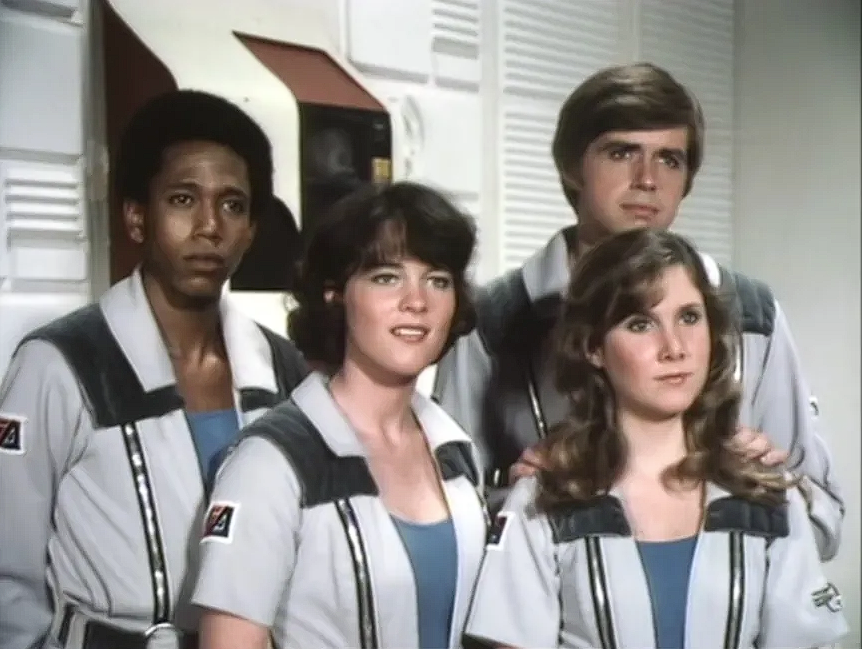
The show followed a team of young space cadets led by Chris Gentry (Ric Carrott, The Swinging Cheerleaders) and his telepathic sister Laura (veteran child actress Pamelyn Ferdin). Their fellow students included characters played by Brian Tochi, Ty Henderson, Eric Greene, and Maggie Cooper (An Eye for an Eye), all studying under the watchful eye of Commander Isaac Gampu, played by Lost in Space’s Jonathan Harris—sporting one of the more peculiar hairstyles ever issued to a space commander.
Each week, the cadets would venture out into the galaxy aboard their Seeker spacecraft, encounter some mysterious cosmic phenomenon or alien dilemma, make a questionable decision or two, and ultimately learn something about honor, courage, responsibility, friendship, or the proper application of 38th-century common sense.
It was, after all, Saturday morning television.
Space Academy was Filmation Studios’ second live-action science fiction series, following the previous year’s post-apocalyptic Ark II—which was essentially Damnation Alley for kids, only with considerably more optimism and fewer mutant cockroaches.
Although Space Academy was produced on what would be considered a modest television budget, it was reportedly the most expensive children’s series Filmation had attempted up to that point, and much of that money is right there on the screen.
The sets are surprisingly elaborate. The uniforms look convincing. The miniature photography is excellent. And the special effects are far more ambitious than you might expect from a Saturday morning children’s program made in 1977.
There’s a tendency today to look at miniature effects from the pre-CGI era and dismiss them as “cheesy.” I’ve never understood that attitude. The miniature work in Space Academy is handcrafted filmmaking—the product of model builders, painters, photographers, lighting technicians and effects artists physically constructing an imaginary universe one piece at a time.
And Space Academy has some sweet miniature work.
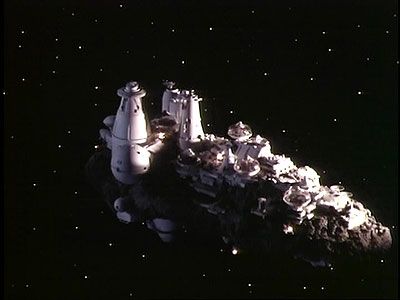
The spacecraft are nicely designed and surprisingly detailed, particularly the Academy itself: an enormous futuristic complex constructed on and inside an asteroid. It’s a terrific concept and gives the series an instantly recognizable visual identity. The station doesn’t simply float in space like another anonymous metal wheel or cylinder. It looks like something explorers actually carved into a piece of the universe and gradually expanded over generations.
The Seeker shuttlecraft are equally memorable. They were deliberately designed to resemble the futuristic vehicle from Ark II, allowing notoriously budget-conscious Filmation to reuse the expensive full-sized vehicle prop. That kind of creative recycling was practically an art form in 1970s television production.
More importantly, the effects hold up because the people creating them knew what they were doing.
Effects supervisor Chuck Comisky later worked on Roger Corman’s wonderfully excessive 1980 space opera Battle Beyond the Stars, while members of the effects crew would go on to work on Star Wars and its sequels. Watching Space Academy today, you can see that craftsmanship developing in real time: carefully photographed models, convincing spacecraft motion, optical effects, matte work and miniature environments created years before computers made such imagery commonplace.
The scripts are more uneven.
At its best, Space Academy offers some genuinely interesting science-fiction ideas and surprisingly thoughtful character stories. There are mysteries, strange worlds, unusual alien encounters and the occasional philosophical question buried beneath the Saturday morning adventure format.
At other times, it is very definitely a children’s television show produced in 1977.
Problems are occasionally solved a little too conveniently. Characters explain things that everyone in the room should already know. Lessons about cooperation and responsibility sometimes arrive with all the subtlety of an asteroid striking the Academy.
And almost inevitably, somewhere near the end of the episode, everyone realizes what they have learned.
But that sincerity is also part of the show’s charm.
There is something wonderfully optimistic about Space Academy. The future is not a dystopia. Humanity has survived. We are exploring the universe, studying its mysteries and training young people to become thoughtful, responsible explorers.
Competence matters. Curiosity matters. Character matters.
Even Commander Gampu, despite Jonathan Harris occasionally sounding as though Dr. Smith wandered onto the wrong Filmation soundstage, is fundamentally a mentor rather than an authoritarian figure. His job is not simply to command the cadets but to help them understand why their decisions matter.
Sharp-eyed Star Trek fans may also recognize two of the young actors. Brian Tochi and Pamelyn Ferdin both appeared years earlier in the notorious third-season episode “And the Children Shall Lead.” Apparently surviving Gorgan was excellent preparation for enrollment at Space Academy.
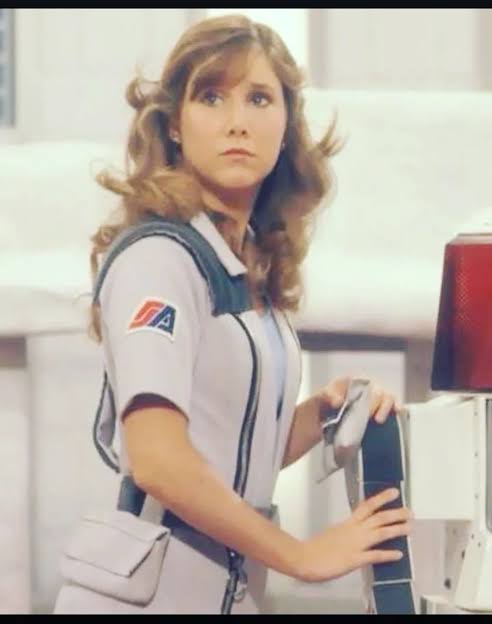
The series lasted only a single season, but the basic concept didn’t disappear. A year later, Filmation returned to the same universe with the considerably more action-oriented Jason of Star Command, essentially mutating the educational space-school premise into a full-blown Saturday morning space opera complete with villains, robots, cliffhangers and even James Doohan.
But I’ve always had fond memories of Space Academy.
It occupies a very particular moment in science-fiction television: after Star Trek, Space: 1999 and Ark II, but just before Star Wars completely rewired popular expectations of what was possible with Science Fiction.
It’s earnest, imaginative, occasionally ridiculous and filled with exactly the sort of miniature spaceships, mysterious planets and optimistic futuristic gadgetry that made being a science-fiction kid in the 1970s so much fun.
And now close to 50 years later, that asteroid-shaped school still looks like a pretty great place to spend Saturday morning.
Worth a look.
All episodes are available on Youtube!
