
I came to Hellraiser through the books. I'd read the Books of Blood before the film came out and was already sold on Barker as a writer, so when the movie arrived I was there. I loved it. The design of Pinhead, the Lead Cenobite, was a big part of why. There was nothing else that looked like that.
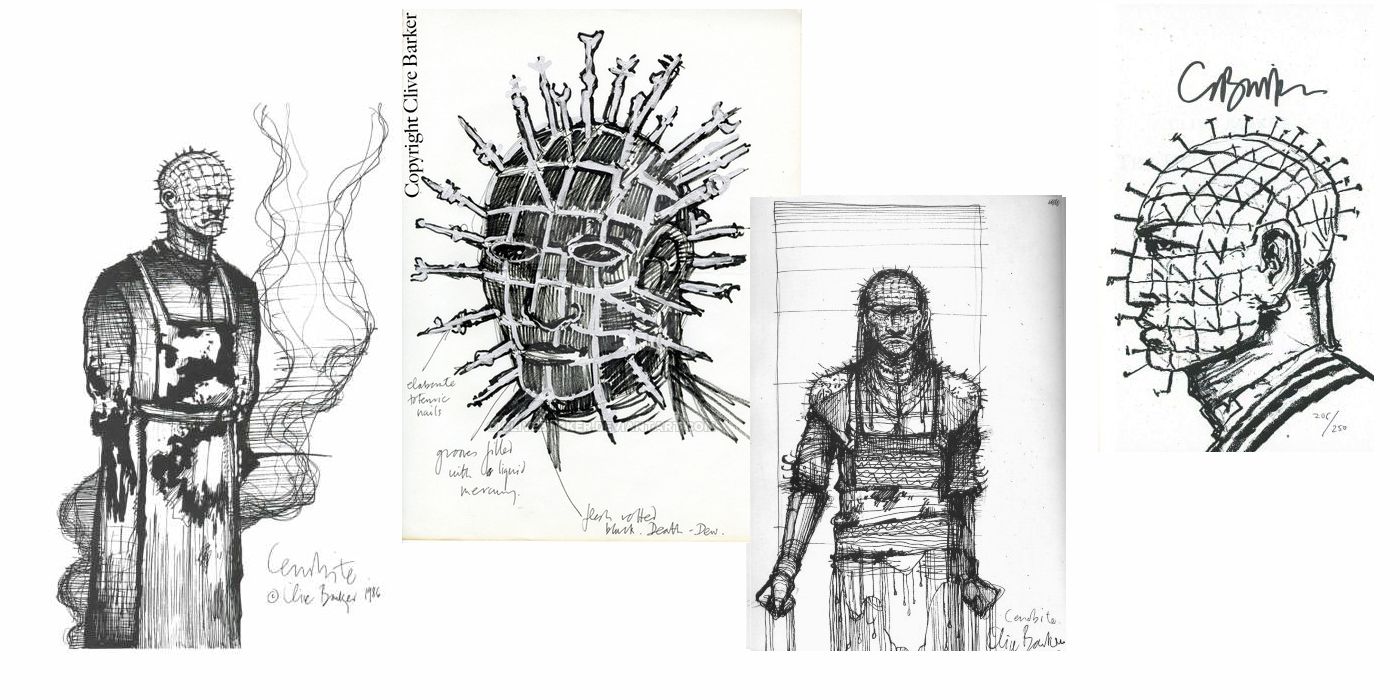
I ran across an article at clivebarker.info that traces exactly how that look came together, and I finally sat down and read it properly: The Evolution of Pinhead.
The piece walks through the full lineage. Barker's own early avant-garde visual experiments, the specific subcultures he was drawing from, and then the practical side: the collaborative makeup engineering that translated those ideas into something that could exist on a face and hold up on film. It's not a single eureka moment. It's a progression, with a lot of hands involved and a lot of influences feeding in from unexpected directions.

What I got out of reading it is a clearer sense of why the design works as well as it does. Pinhead doesn't look like a monster someone designed for a movie. He looks like something that grew out of a real visual tradition, because in a meaningful way he did. The grid of pins, the pale skin, the formal bearing: all of it has roots the article actually traces rather than just gestures at. It's the kind of piece where you finish it and the thing you already liked makes more sense to you.

If you care about practical effects history or about Barker's work specifically, it's worth your time. Recommended.
